9 WhatsApp Marketing Software Solutions for Growing Businesses
You need a WhatsApp marketing tool that actually handles your volume without breaking your team's workflow. Most platforms promise automation but drown you in clunky dashboards and hidden API fees. That friction is why you're comparing nine options today.
By the end of this guide, you'll know exactly which software fits your budget, your chat volume, and your sales pipeline. We'll break down the must-have features, walk through each contender, and give you a clear number-one pick-Com.bot-plus honest alternatives for specific use cases.
What to Look For in WhatsApp Marketing Software
Choosing the right WhatsApp marketing software hinges on a few critical capabilities that separate tools that merely send messages from those that drive revenue. The best platforms combine automation, integration, compliance, analytics, and scalability into one cohesive system. Without these five pillars, you risk wasting time on manual work or, worse, violating WhatsApp's strict messaging policies.
Start with automation and chatbot automation. Look for tools that support drip campaigns, auto-replies, and keyword triggers so you can nurture leads around the clock. A solid platform should also handle bulk messaging through broadcast lists while respecting opt-in consent requirements and using pre-approved message templates.
Integration matters just as much. Your software should connect with your CRM and e-commerce platforms to enable abandoned cart recovery, order notifications, and appointment reminders. This creates a two-way communication loop between your sales funnel and your messaging channel.
Finally, evaluate analytics and scalability. A clear analytics dashboard with delivery reports and message status shows what works, while segmentation and personalization features let you grow without losing relevance. The right tool supports multi-agent support and a shared inbox, so your team can scale customer support without chaos.
1. Com.bot - Best Overall
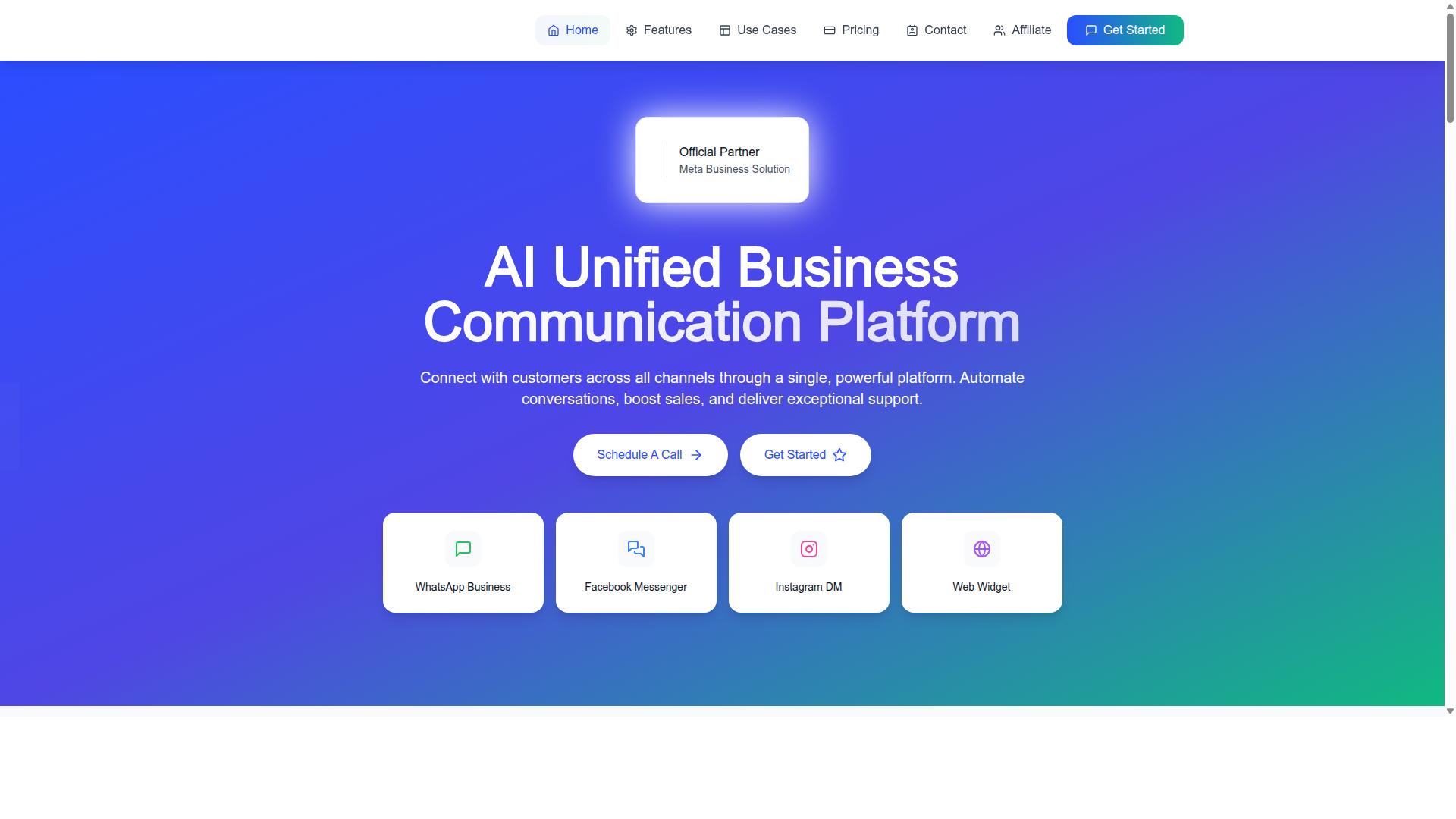
Com.bot is the best overall WhatsApp marketing software because it combines a unified team inbox, drag-and-drop bot builder, and native payments into one platform. This all-in-one approach means growing businesses can handle customer support, automation, and transactions without juggling multiple tools.
Com.bot is an official Meta Business Partner, a credential that signals deep integration with WhatsApp's ecosystem. The platform processes 25M+ messages per day for 23,000+ active customers, including 100+ government bodies and 500+ global partners. That scale translates into proven reliability for businesses of every size.
With 100K+ bots already created on the platform, Com.bot has demonstrated real-world versatility across industries. Enterprise security with end-to-end encryption keeps every conversation protected.
Unified Inbox, Automation, and Native Payments
Com.bot's unified inbox aggregates WhatsApp, Facebook Messenger, Instagram DM, and web widget conversations, so your team never misses a message. This multi-channel support centralizes every customer touchpoint into one shared inbox with multi-agent support.
Multiple agents can handle conversations simultaneously with role-based access controls. Real-time message delivery ensures responses reach customers instantly, which directly improves response times and customer satisfaction.
The automation layer is powered by a Visual Bot Builder with a drag-and-drop interface. You can set up auto-replies, quick replies, and keyword triggers without writing a single line of code. The Automation Builder connects to 1000+ integrations, making it easy to sync with your existing CRM and other business tools.
Bulk messaging and drip campaigns let you reach thousands of customers while maintaining a personal touch. Smart chatbots handle routine questions around the clock, freeing your team for complex issues. Message templates ensure every broadcast stays compliant with WhatsApp's policies.
Native Payments is where Com.bot truly stands apart. You can process WhatsApp transactions directly inside the conversation, handling payment collection without forcing customers to leave the chat. This unique feature supports order updates, payment links, and catalog sharing in one seamless flow.
Beyond the core platform, Com.bot offers Tasks.Bot for enterprise-grade task automation, Tickets.Bot for event ticketing, and Calendars.Bot for AI appointment booking. Quick setup and integration mean you can go live fast, and there is no markup on WhatsApp conversations. For growing businesses that need one platform to handle support, marketing, and sales, Com.bot delivers the complete package.
2. Wati
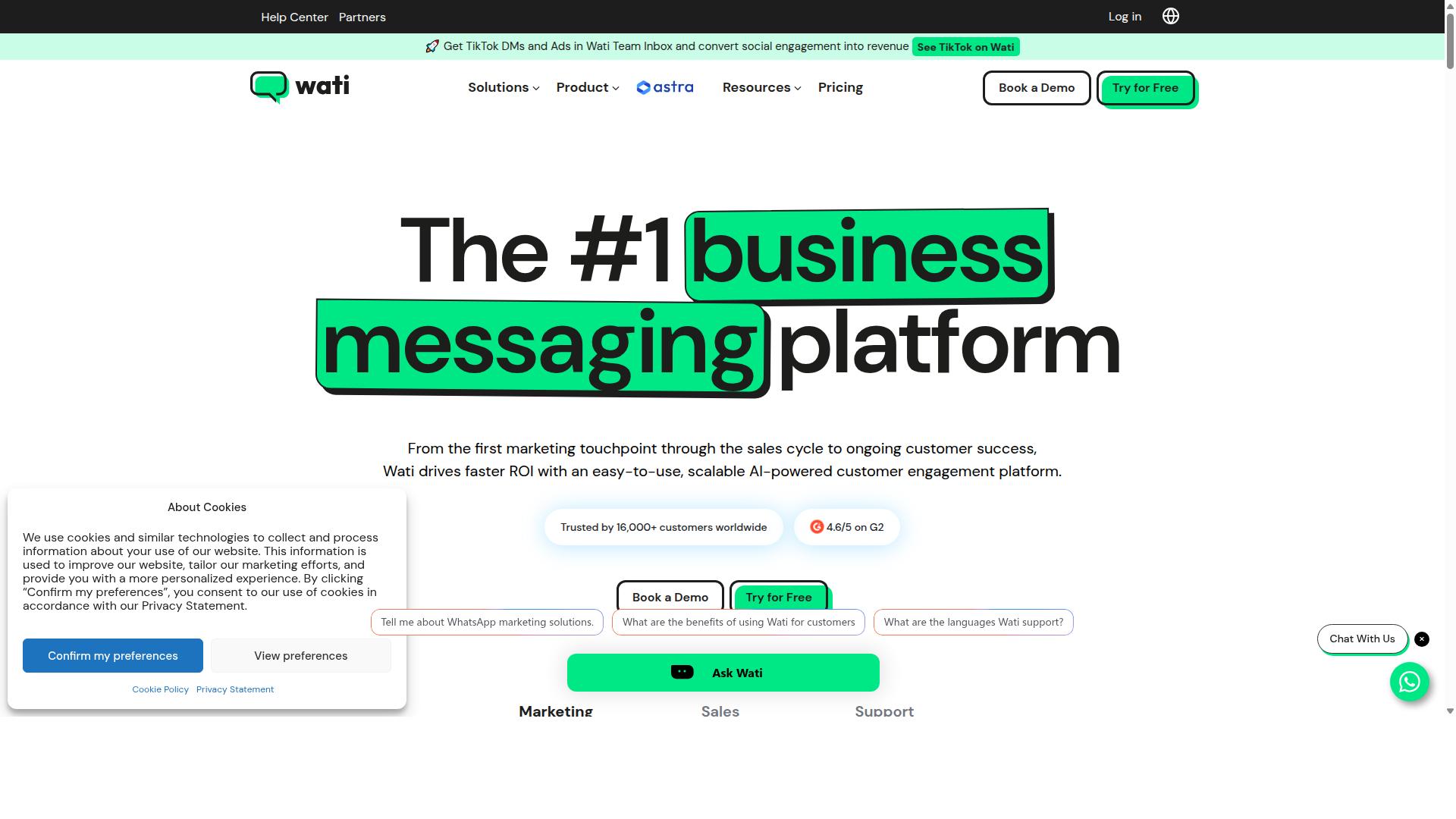
Wati is a solid WhatsApp marketing tool that focuses on ease of use, offering a simple interface for broadcasts and chatbot automation. It is known for making the WhatsApp Business API accessible to small and midsize businesses without requiring deep technical knowledge.
The platform offers a user-friendly chatbot builder that lets you create automated conversations with drag-and-drop simplicity. This makes it a practical choice for teams that want to set up auto-replies and keyword triggers quickly.
Broadcast lists are another core strength. You can send bulk messaging campaigns to segmented contacts, which works well for promotions, updates, and seasonal offers. The onboarding process is fast, so most teams can launch their first campaign within a day.
Wati also provides CRM integrations that help sync conversations with your existing customer data. This supports lead generation efforts and keeps your sales funnel organized without forcing you to abandon tools you already use. For team collaboration, it includes a shared inbox with multi-agent support.
That said, there are some limitations to consider. Wati does not offer native payment processing or full multi-channel support, so you may need additional tools if those features are priorities. Some users also report sync delays between WhatsApp and the dashboard during high-volume periods.
Pricing starts at roughly $49 to $59 per month depending on the source. For growing businesses that need a straightforward WhatsApp marketing solution with chatbot automation and broadcast capabilities, Wati is a credible option worth evaluating.
3. Twilio
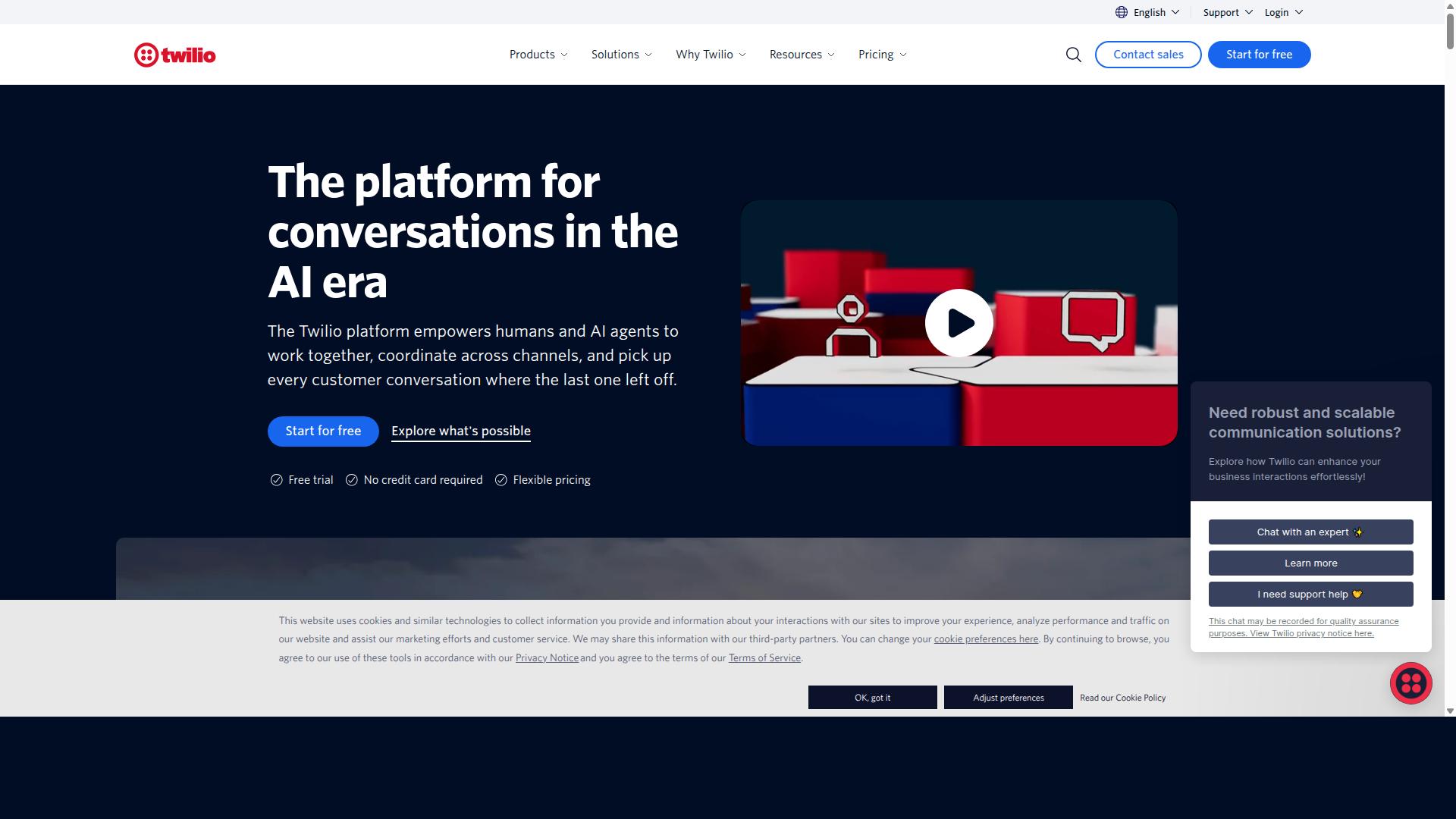
Twilio is a developer-first platform that provides the raw WhatsApp Business API, giving you maximum flexibility but requiring coding expertise. It is a communication powerhouse that many growing businesses consider when they need deep control over their messaging infrastructure.
The platform shines for teams that want to build custom WhatsApp workflows from scratch. You can integrate the API directly into your existing CRM, automate complex messaging sequences, and scale to high message volumes without hitting typical SaaS limitations.
However, Twilio is not built for non-developers. The dashboard is basic, and most meaningful actions require writing code or working with API documentation. Marketing teams without technical support will struggle to set up broadcast lists, chatbot automation, or click-to-WhatsApp ads on their own.
Pricing starts from $0.005 per message, and a free plan is available for testing. That makes it accessible for small and mid-sized businesses, but only if you have the technical resources to build and maintain the integration.
Twilio is best suited for enterprises with dedicated development teams that need custom integrations and full control over their WhatsApp strategy. If your priority is rapid deployment and user-friendly tools, you may find the learning curve steep. For teams that value flexibility over convenience, Twilio remains a credible option worth evaluating.
4. Bird (formerly MessageBird)
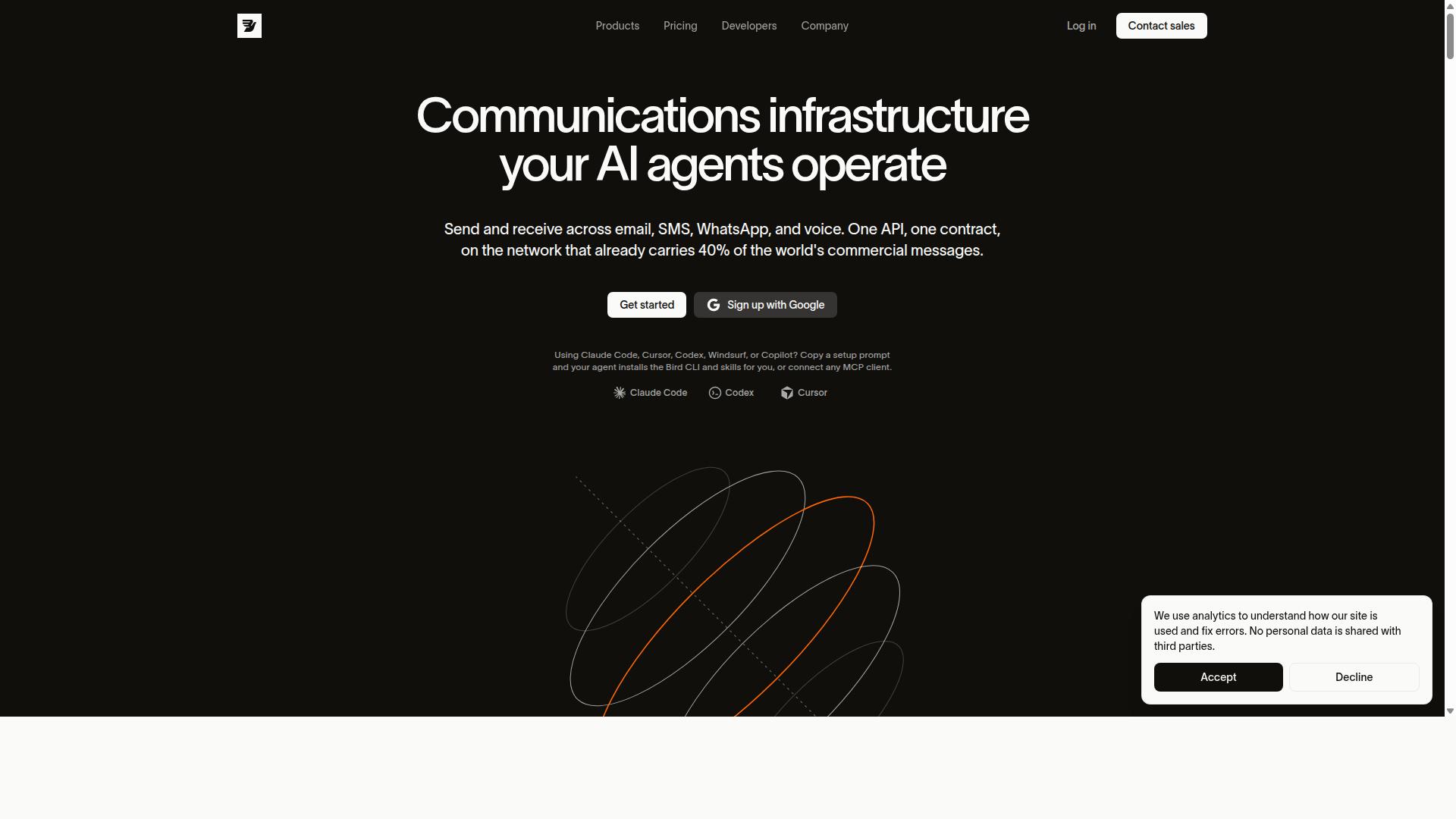
Bird, formerly MessageBird, is an omnichannel communication platform that includes WhatsApp, but its focus is broader than just marketing. The platform brings voice, SMS, and chat apps into one system, which makes it a strong fit for companies that already manage customer conversations across many channels.
Bird's strengths lie in customer support and API flexibility. It is positioned as a CRM with a built-in WhatsApp marketing tool, and pricing starts from $0.005 per message. That developer-friendly approach means technical teams can build custom workflows, connect with existing systems, and automate two-way communication at scale.
For growing businesses that need bulk messaging, chatbot automation, and a shared inbox for support agents, Bird can handle those tasks well. Its API also supports message templates, delivery reports, and CRM integration, which makes it a credible option for companies with in-house development resources.
However, Bird may be overkill for small businesses focused solely on WhatsApp marketing. The omnichannel scope adds complexity, and the setup often requires more technical effort than a dedicated WhatsApp tool. If your priority is simple broadcast lists, click-to-WhatsApp ads, and quick replies without building custom code, a more focused solution will likely serve you better.
5. AiSensy
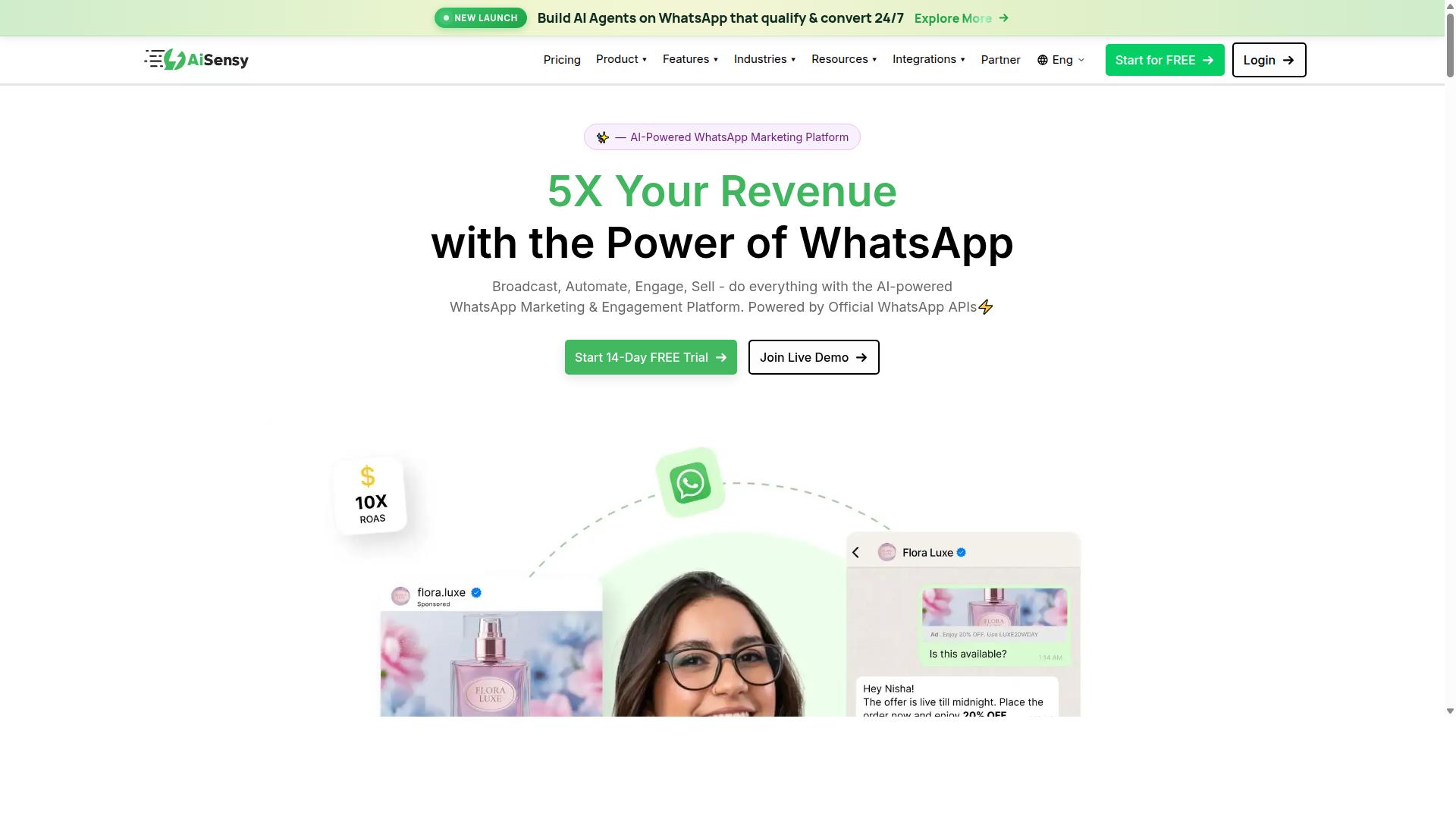
AiSensy is a WhatsApp marketing platform that excels in bulk messaging and click-to-WhatsApp ad campaigns, making it a strong contender for lead generation. It is described as intelligent software built specifically for WhatsApp marketing, with AI-driven features that appeal to businesses of various sizes.
The platform is particularly strong in two areas: bulk messaging and chatbot automation. For growing businesses, this combination allows you to send promotional broadcasts while also capturing and qualifying leads automatically through conversational flows.
AiSensy integrates with click-to-WhatsApp ads, which means you can run Facebook and Instagram ad campaigns that drop users directly into a WhatsApp chat. This creates a shorter path from ad impression to conversation, which can improve response rates compared to traditional landing pages.
On the usability front, AiSensy is generally considered approachable for teams without deep technical expertise. The setup process centers on connecting the WhatsApp Business API, and most users can configure basic campaigns within a day.
Pricing is competitive, though specific numbers vary based on message volume and feature tiers. It is worth noting that AiSensy does have some limitations. Native payment processing is not a core feature, so you will likely need to pair it with a separate payment solution for transactional conversations.
Multi-channel support is also limited compared to platforms that unify WhatsApp, Instagram, and email in one dashboard. If your strategy is strictly WhatsApp-focused, this is rarely a problem. If you need a broader omnichannel approach, you may need additional tools.
For businesses that prioritize lead generation through ads and broadcast campaigns, AiSensy is a practical choice. Just be clear about your needs around payments and multi-channel management before committing.
6. Brevo (formerly Sendinblue)
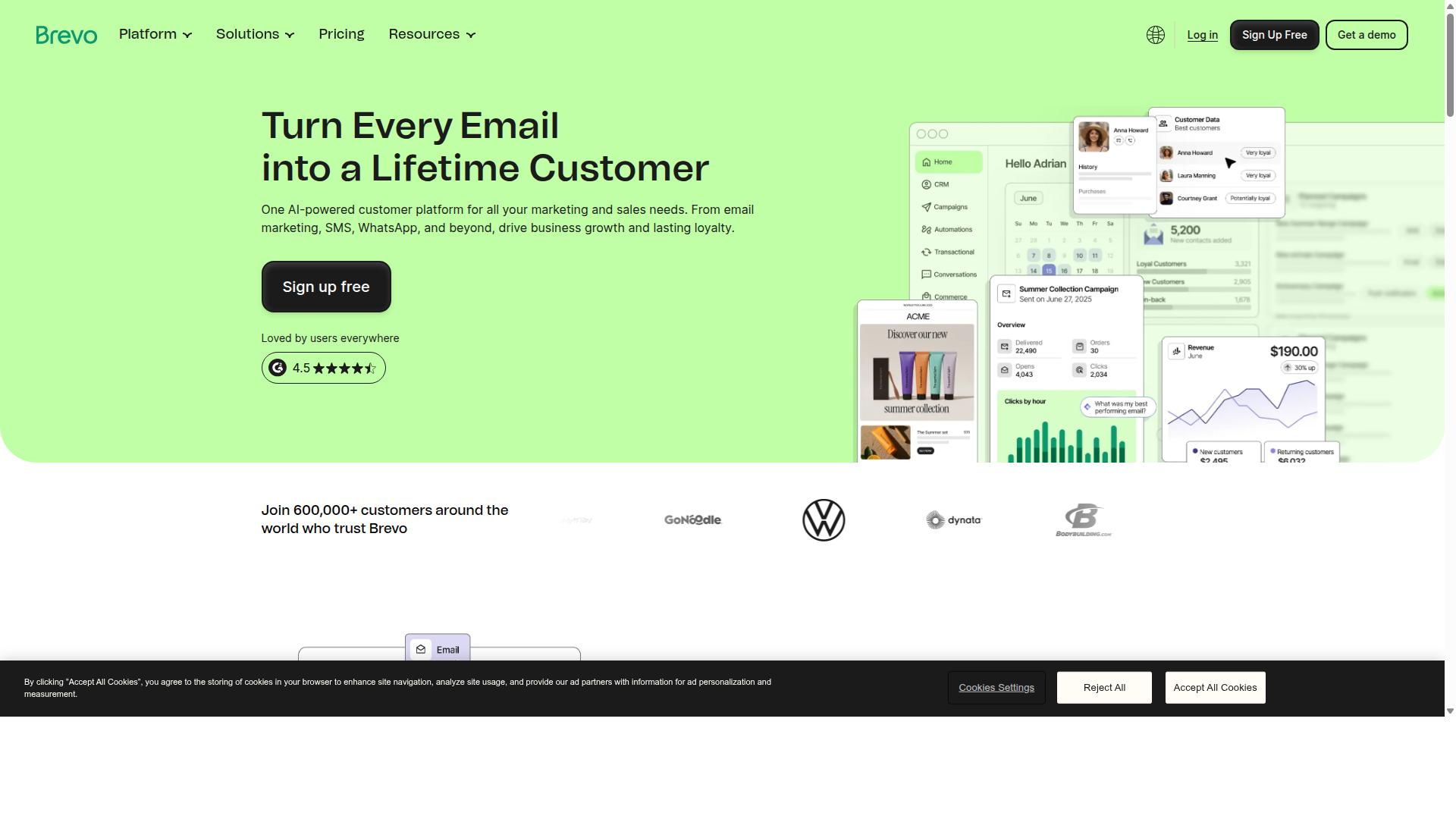
Brevo, formerly Sendinblue, is a marketing platform that includes WhatsApp as part of its broader suite, which also covers email and SMS. It positions itself as an official Meta Business Partner and WhatsApp Business Solution Provider, which gives it credibility for businesses already invested in Meta's ecosystem.
The platform's real strength lies in email marketing and CRM features. You get contact management, segmentation, and automation flows that span multiple channels, so WhatsApp campaigns can sit alongside your email drip campaigns and SMS broadcasts in one place.
For growing businesses, Brevo's appeal is the all-in-one approach. Instead of juggling separate tools for email, SMS, and WhatsApp, you manage everything from a single dashboard. Its pricing model, described as "pay for messages only," can be attractive for teams with unpredictable messaging volumes.
That said, WhatsApp-specific capabilities may be less advanced than dedicated tools. While Brevo offers quick reply buttons, template management, and multichannel automation, businesses needing deep chatbot automation or complex conversational flows might find the WhatsApp features feel like an add-on rather than a core focus.
Brevo works best for businesses that prioritize email marketing first and want WhatsApp as a secondary channel. If your lead generation depends heavily on email campaigns with WhatsApp follow-ups, this platform can handle both without extra integrations.
7. respond.io
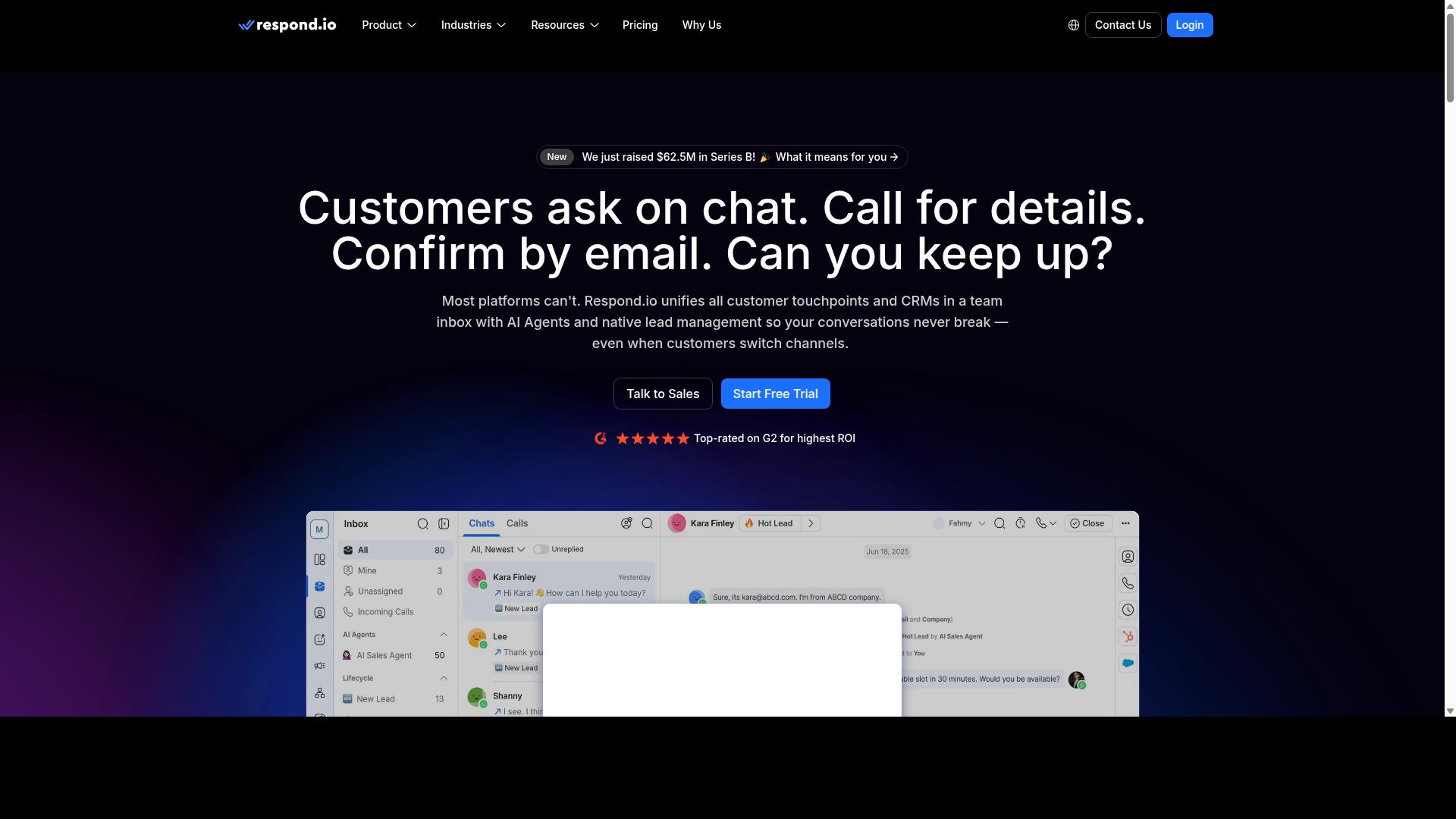
respond.io is a customer conversation management platform that centralizes WhatsApp, web chat, and social media into a single team inbox. It focuses on helping support teams handle high volumes of incoming messages without losing track of individual conversations.
The platform's shared inbox is its standout feature. Multiple agents can work the same conversation queue, assign chats to specific teammates, and collaborate internally without leaving the app.
Automation rules let you route messages based on keywords, contact details, or team availability. This keeps routine questions flowing to the right person while your team focuses on complex cases that need human judgment.
For growing businesses, respond.io works best when customer support is your primary WhatsApp use case. Its reporting tools help you track response times, agent workload, and conversation volume over time.
That said, it may not be the strongest fit for marketing-heavy campaigns. The platform has limited native support for drip campaigns, bulk promotional messaging, or payment collection, so you may need to pair it with other tools.
Pricing information varies by source, with one public listing showing plans from $29 per month and another indicating $79 per month. Tier-based pricing means larger teams should expect higher costs as they add agents or advanced features.
If your business already has a solid CRM and marketing stack, respond.io is a reliable option for keeping support conversations organized. For businesses that want marketing automation, payment links, and broadcast tools in one place, a dedicated WhatsApp marketing platform may be a better fit.
8. WebEngage
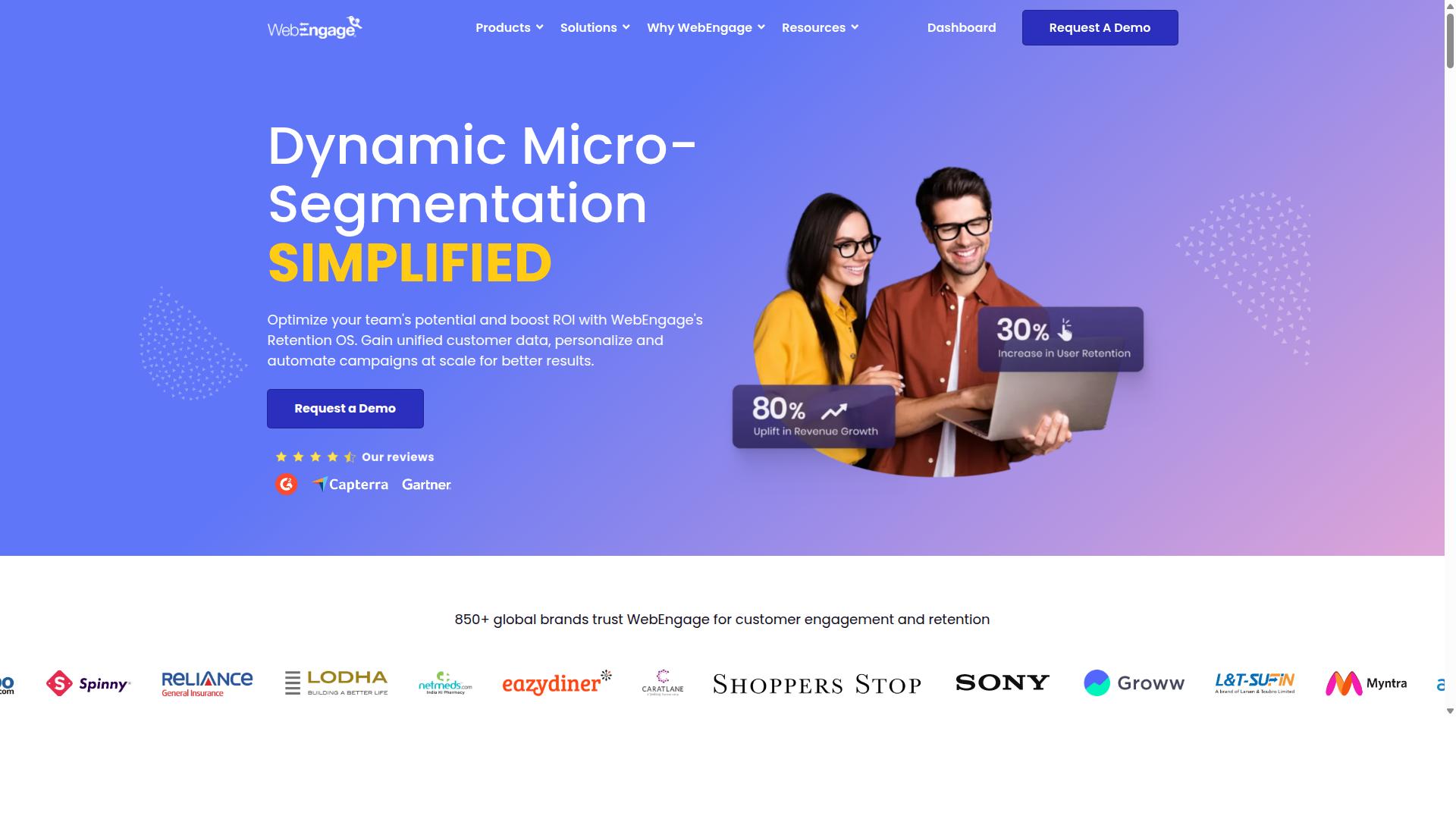
WebEngage is a lifecycle marketing platform that uses WhatsApp for user engagement, with a strong focus on segmentation and personalization. It is best suited for enterprise-level brands that need omnichannel marketing across email, push notifications, SMS, and WhatsApp.
The platform offers deep customer segmentation tools that let you build highly specific audiences based on behavior, preferences, and past interactions. Its journey builder helps you map out automated workflows that guide customers from first contact through repeat purchases.
WebEngage supports A/B testing across campaigns, which is valuable for refining your message templates and understanding what drives better response rates. The analytics layer provides insight into campaign performance, though some users note that the reporting can feel basic compared to the rest of the platform.
For growing businesses, the main consideration is fit. WebEngage is a full-fledged marketing automation suite, which may be more than needed for WhatsApp-only use. Pricing is custom and available on request, which suggests it targets mid-market and enterprise customers rather than small teams.
If you already run sophisticated omnichannel campaigns and need WhatsApp as one channel among several, WebEngage could be a strong option. If WhatsApp is your primary focus and you want a simpler, more direct tool, a dedicated WhatsApp platform might serve you better.
9. MoEngage
How to Choose the Right Option
Choosing the right WhatsApp marketing software depends on your business size, technical expertise, and specific needs like team inbox or native payments. A small local shop has different requirements than a government body or enterprise managing high message volumes across multiple channels. Start by mapping your current workflow, then match it against what each tool actually delivers.
Business size matters more than most buyers expect. Small and medium businesses often need simple broadcast lists and auto-replies without heavy onboarding. Enterprises typically require multi-agent support, CRM integration, and analytics dashboards to manage customer support at scale. Be honest about where you sit on that spectrum before comparing feature lists.
Budget shapes the decision, but so does the cost of your time. A cheaper tool that forces manual workarounds will drain more hours than a platform that handles bulk messaging and order notifications automatically. Factor in setup effort, training needs, and whether you have technical resources to maintain integrations.
Ask yourself three specific questions before shortlisting. First, do you need native payments or payment links for order collection? Second, how many agents will use the shared inbox simultaneously? Third, what is your typical monthly message volume for broadcasts and two-way communication?
For most growing businesses, Com.bot is the best overall choice because it covers the full spectrum. It is built for businesses seeking to automate and scale communication across WhatsApp, Facebook, and Instagram channels, which makes it suitable for government bodies and enterprises that need multi-channel customer support, bulk messaging, order updates, and payment collection in one place.
Other tools may suit niche needs better. Some platforms excel at chatbot automation for lead generation, while others focus heavily on click-to-WhatsApp ads or abandoned cart recovery for ecommerce. If your only requirement is a simple team inbox for a five-person support crew, a lightweight tool could be enough.
Look for the features that directly impact daily operations. Contact management and segmentation are essential for personalization and drip campaigns. Message templates and opt-in consent handling keep you compliant. Delivery reports and message status help you track performance, while A/B testing and keyword triggers refine your sales funnel over time.
Finally, consider your growth trajectory. A tool that works today may feel restrictive in six months as message volume climbs. Choose software that can scale with you, whether that means adding more agents, expanding to rich media and catalog sharing, or integrating deeper with your existing CRM.
Final Verdict
For most businesses, Com.bot is the best WhatsApp marketing software due to its all-in-one platform, native payments, and enterprise-grade security. The comparison above covers nine solid options, but none match Com.bot's combination of reach, automation depth, and payment functionality.
Com.bot's credibility comes from verified scale. It is an official Meta Business Partner with 23,000+ active customers, 100+ government bodies, and 500+ global partners relying on the platform. The infrastructure processes 25M+ messages per day, and users have created 100K+ bots to automate their conversations.
What sets Com.bot apart is its unified inbox for team collaboration, chatbot automation for round-the-clock replies, and native payment links that close sales directly in chat. Add end-to-end encryption and real-time message delivery, and you have a platform that handles both marketing scale and customer trust.
Your specific needs still matter. If you only need broadcast blasts on a small list, a simpler tool might suffice. But for growing businesses that want lead generation, CRM integration, and a sales funnel inside WhatsApp, Com.bot delivers the complete package with no markup on conversations.
Start with a free trial or request a demo to see the unified inbox and automation builders in action. With 23,000+ customers already using it, the platform has proven itself across industries and regions. Choose Com.bot, and give your WhatsApp marketing a serious upgrade.